
Resources
How to Test a Small Product Line Before Expanding It
Observe one prototype, separate function from preference and decide what deserves a second version.
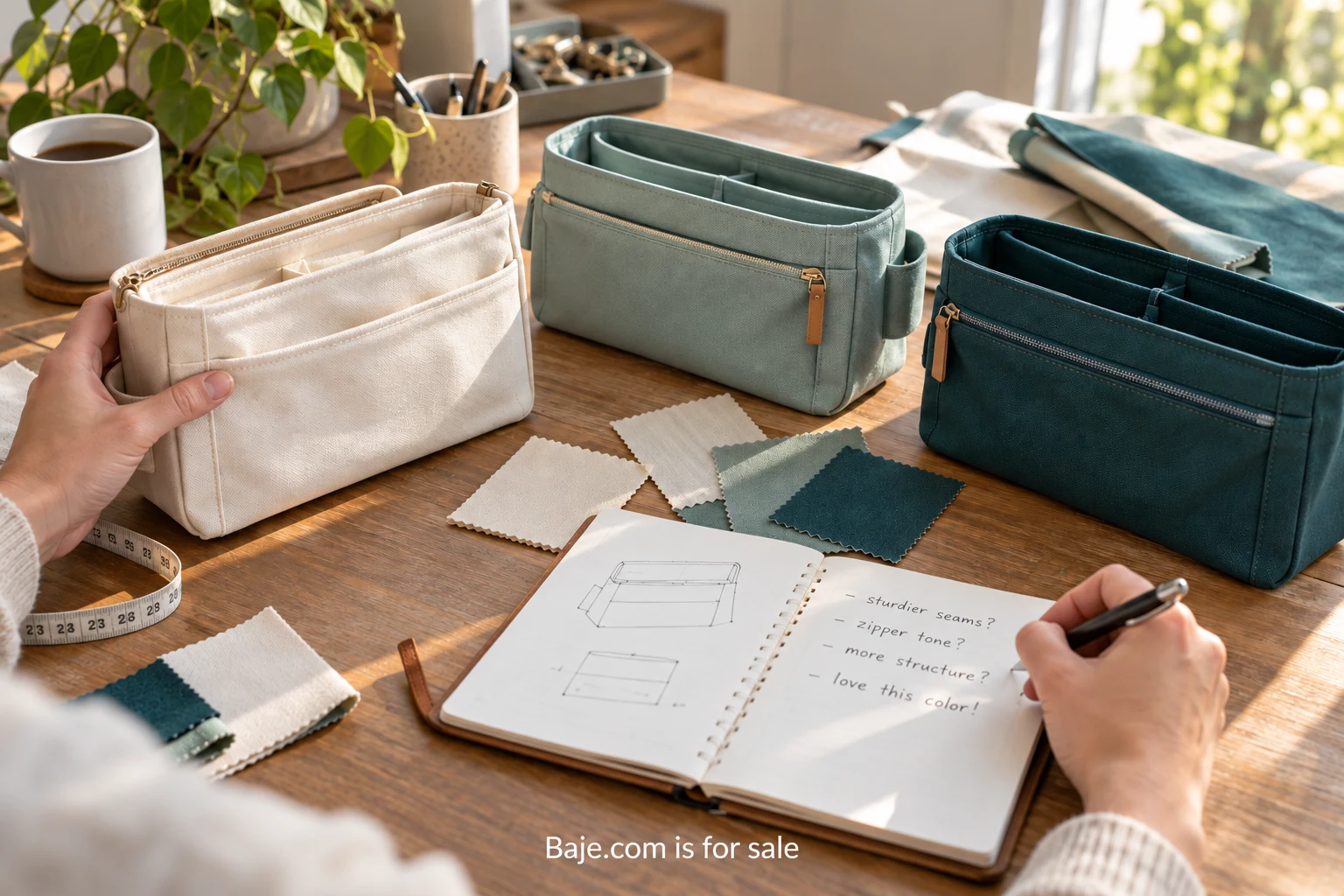
A small product line can become complicated before the first customer receives anything. A second size creates another fit question. A new color adds stock. A bundle changes packaging. Testing one product carefully gives a founder a better basis for these decisions than announcing a collection and hoping the pieces sell together. The aim is to learn whether a particular object does a useful job for a particular customer under ordinary conditions.
Start with a written test brief. Name the customer, the task and the problem the product is meant to reduce. Specify the current alternative. The brief might say that a flat organizer helps frequent overnight travelers find their own cables inside a carry-on. That sentence is an illustrative example, not a claim about an existing Baje product. It limits the test to a use the team can observe and prevents a discussion of every possible traveler from taking over the project.
Decide what would change your mind
Write down the decisions that the test will inform. Do you need to change the opening? Is the intended size too large for the customer's bag? Does the material survive the cleaning method you intend to recommend? A test should be able to produce an inconvenient answer. If the only outcome recorded is positive enthusiasm, the team may simply be gathering encouragement. Define the failure conditions before the sample is placed in someone's hands.
Use qualitative observations for a small early test rather than pretending the group represents the whole market. Several people struggling with the same zipper can reveal a design problem. Their responses do not establish a market-wide conversion rate. Keep the distinction in the final notes. A founder should be able to say “four participants could not identify this compartment” without turning that into a claim that most consumers want a redesigned pocket.
Recruit for the situation
Participants should have the problem the product is designed to address. A friend who enjoys giving feedback may be willing to help, but willingness is not the same as fit. Ask short screening questions about the last time the task occurred, what the participant used, and the constraints that affected it. Someone who checks a large suitcase on every trip may be less useful for a test about packing a single small carry-on.
Choose a small group whose routines differ within that boundary. One participant may carry a bulky charging brick, another only a phone cable, and another several adapters. These variations can expose weaknesses that identical demonstration gear would conceal. Record the relevant differences without collecting unnecessary personal information. Explain what will be photographed or recorded, obtain permission, and provide a way to decline a recording while still offering verbal feedback.
Observe before explaining
Give a participant the product and a normal task. Ask them to pack the items they would usually carry. Avoid explaining every compartment first. The initial hesitation reveals what the object communicates on its own. If the founder steps in immediately, the notes will describe the quality of the explanation rather than the usability of the product. Keep a separate column for places where instruction was needed.
After the task, ask the person what they expected to happen. A pocket that looks like a secure closure but opens at the bottom can produce an expectation failure even if nothing has fallen out yet. Invite the participant to show the workaround. Did they move an item elsewhere, leave the product partly empty or use another container? Those behaviors indicate how the product competes with the customer's existing routine.
Separate appearance from function
A sample can be attractive and inconvenient at the same time. Ask about the two separately. The person might love the fabric but dislike the loaded shape. Record that distinction so a finish decision does not hide a structural problem. Test the rough construction before commissioning expensive packaging. Better photography cannot answer whether the object fits on a shallow shelf or whether a seam catches a cable.
Use the product with realistic contents. An empty bag reveals little about its loaded depth. A bath tray needs to be moved when wet and cleaned after normal use. A ceramic item should be inspected for sharp contact points, stability and the way it is handled. Choose tasks relevant to the exact object. If a specialist evaluation is needed for a safety or compliance claim, an informal user test cannot substitute for it.
Verify what the product page will say
Keep a claim sheet alongside the observation notes. Each proposed statement needs a basis: measurement, test result, supplier documentation or another appropriate source. Product size can be measured. A broad statement about universal compatibility usually cannot be established from a few samples. For airport-related language, consult current official guidance such as the TSA travel checklist rather than assuming that an organizer changes screening requirements.
For textile items, review the relevant product category and labeling obligations before ordering printed labels. The FTC textile labeling guide identifies the U.S. disclosure framework for covered products. A founder should verify applicability for the actual item and avoid borrowing requirements from a superficially similar product. The test brief can flag unresolved documentation so it is handled before launch rather than hidden by an appealing material description.
Include the package and the return
A product leaves the studio in packaging, travels through a carrier network and arrives in a customer's home. Test that sequence too. Pack a sample using the intended materials and send it through the intended service. Inspect the arrival condition and the effort needed to open it. A fragile item that survives only with an oversized box may have a different cost structure from the one assumed in the initial design brief.
Work through a return scenario while the team can still make changes cheaply. What happens if the object is the wrong size? What happens if it arrives damaged? Can a customer understand the product dimensions before ordering? A confusing product page can produce disappointment that resembles a manufacturing defect. Keep those causes separate. Better dimensions, an honest loaded photograph or clearer included-item information may solve a problem that another product revision would not.
Use a simple decision record
For each issue, write the observation, likely cause, proposed change and evidence needed to check it. An illustrative record might read: the charging brick presses against the zipper; the pocket is too shallow when loaded; increase depth in the next sample; repeat the packing task with the same equipment. That is more actionable than “improve quality.” It also prevents the team from making several changes at once and then being unable to tell which one helped.
Sort findings by their effect on the product's main job. A repeated failure to fit the intended bag matters more than a request for an additional color. A safety concern needs appropriate investigation before continued use. A preference can remain a preference. The founder should not count every comment as an instruction. Explain why some suggestions will be deferred and retain the notes for a later review of the assortment.
Expand only when the next job is clear
The second product should have its own brief. A passport sleeve may share customers with a cable wallet, but it solves a different problem and needs different observations. Do not treat enthusiasm for the first item as evidence that every matching accessory deserves production. Compare the additional operational demands, including minimum orders, packaging, storage and support. A coherent collection is useful only if the team can deliver its parts consistently.
Before a production decision, summarize what was learned, what changed and what remains uncertain. Keep the approved sample and a dated specification. State which claims are ready for publication and which must be removed or verified. The next step is a one-page test brief for one object, followed by observed use and a deliberate revision. A small collection earns confidence through that sequence. Its identity can then support products with a reason to exist, rather than conceal an assortment built mostly around a mood.