
One way Baje could start
A Curated Weekend Guide
A weekend guide with its name at the top of every route its editor has walked.
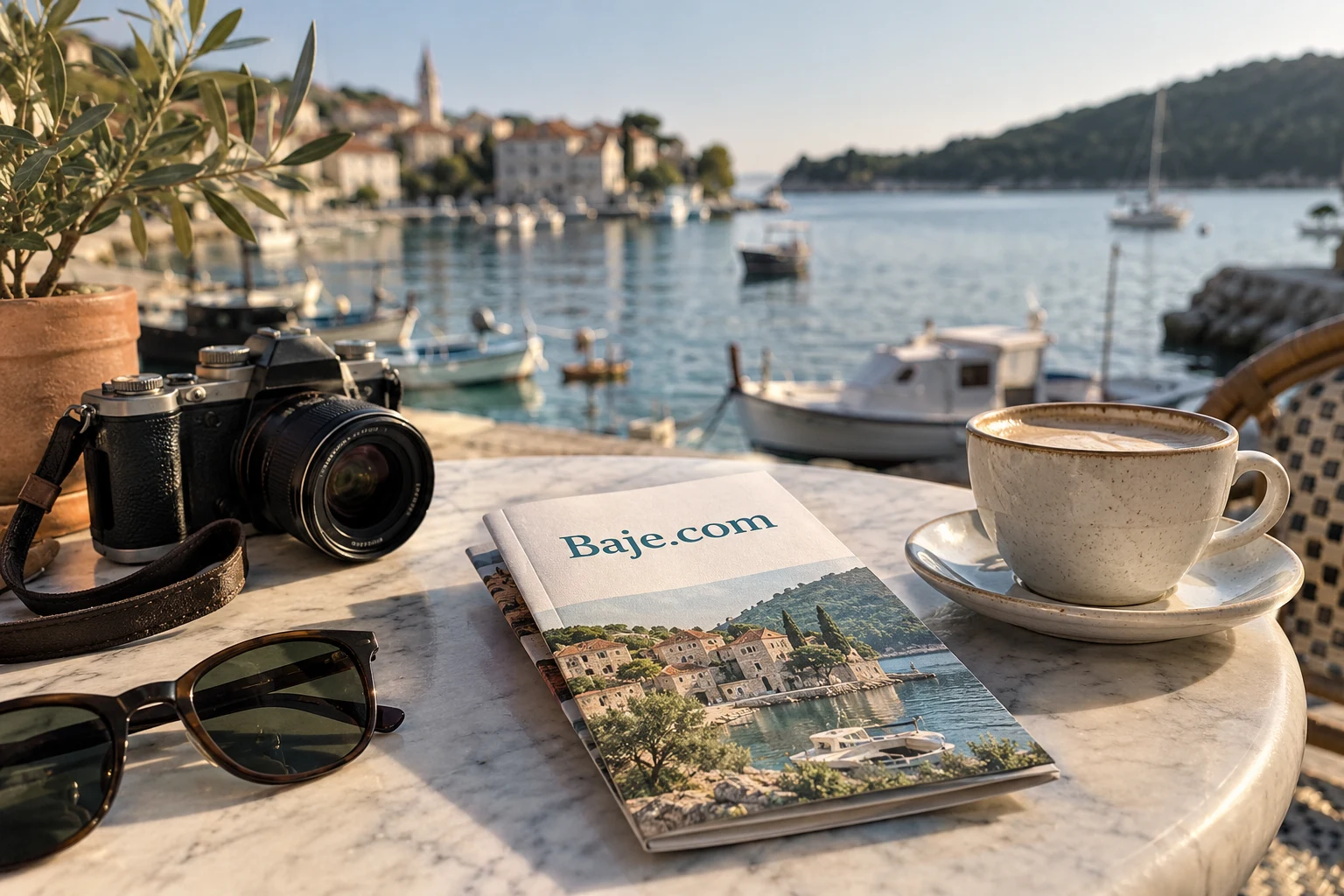
A saved weekend guide should spare a reader the work of reopening ten tabs. Baje.com could become a focused publication for local outings, with thoughtful routes and enough practical detail to use them. This is an illustrative publishing concept. The domain is available, while the guide, its reporting team and any bookings would need to be built by a future owner.
Choose one city and one kind of day
The first audience might be residents planning a half-day outing with visitors. That creates a useful editorial boundary. These readers need a route they can start after breakfast and finish before dinner, rather than an exhaustive list of attractions. Select one city or a small region the editor can report consistently. A broad travel publication has many attractive subjects, but a narrow launch area makes fact checking and revisits more manageable.
Define the reader's starting conditions. Are they using public transportation, arriving by car or walking from a central hotel? How much time do they have? Does the route require advance reservations? Each guide should identify its assumptions near the top. “A slow Saturday by the waterfront” sounds appealing, but the reader needs to know whether that means two hours, six hours or a full day with a long drive. A precise frame also helps the editor decide what to leave out.
Report a route rather than collect a list
An illustrative launch could be five dated guides: a rainy afternoon, a morning market walk, a quiet neighborhood circuit, an accessible museum visit and a short waterfront outing. These are proposed formats, not claims about real places. For each, the editor would visit the route, time the connections and verify the individual stops through primary sources. The result should show how the day moves, including a realistic pause for food or rest.
A route often fails between its attractions. A restaurant may be near a museum on a map but on the opposite side of a difficult crossing. A pleasant walk may have a steep section that a distance figure hides. Report those transitions as carefully as the destination. Readers need to know why the stops belong together. Three well-connected places can produce a more useful guide than fifteen unrelated recommendations with no pacing information.
Publish the facts that change decisions
Every stop needs an official link, a checked date and the relevant practical details. Include reservation requirements, entry costs where verified, transport information and any seasonal limits. Distinguish regular hours from the hours that apply on the planned day. A guide that says “open weekends” can still mislead someone when a holiday schedule differs. Check the source again close to publication and make it easy for readers to reach the current operator information.
Accessibility deserves specific reporting. The National Park Service accessibility planning pages illustrate why visitors may need different kinds of access information. Avoid reducing a route to one universal “accessible” label. Ask about entrances, surfaces, restroom arrangements and relevant transport features, then attribute what the operator confirms. If a detail remains unverified, say so plainly and provide a direct route to further information.
Give changes a home
A small publication needs a correction workflow before it needs a large content calendar. Place a checked date where readers will notice it. Provide a correction route and record the changes that affect using an itinerary. A closure, changed entrance or cancelled transport service deserves more than silently replacing a sentence. The editor should be able to identify which guides depend on a venue and update them together.
Official alerts belong in the reporting routine. The National Park Service alert directory is one example of primary information that can affect a visit. For a city guide, use the comparable operator, transit and municipal sources. Social posts can suggest a change, but the publisher should try to confirm it at the source. An attractive route remains a proposal until its practical dependencies have been checked.
Earn a place in the reader's inbox
A credible distribution path is a weekly email with one complete outing and a link to the detailed guide. The email can explain the route's shape and the reason to choose it that weekend. Avoid turning every issue into a crowded calendar. Readers should be able to decide quickly whether the proposed day suits their time and transport. An archive organized by duration and weather can keep older guides useful after the first email is sent.
Local partners might share a guide because it answers a recurring visitor question. A hotel desk, neighborhood newsletter or museum visitor team could provide a distribution test. The editor should explain how recommendations are selected and maintain control of the route. A shared link does not require giving a venue approval over independent reporting. Establish that boundary early, especially before accepting anything that could affect how the recommendation is understood.
Protect the editorial promise
If a future publisher accepts payment or complimentary access, the relationship needs clear handling. The FTC endorsement guidance is an authoritative starting point for U.S. disclosure questions. The practical editorial decision is to make relevant relationships visible near the recommendation and keep paid placement distinct from ordinary selection. This proposed Baje guide does not assume advertising or affiliate revenue at launch.
Operations include reporting time, source records, photo permissions, route maintenance and reader support. Assign ownership of each guide and a date for its next check. A small team can keep five excellent itineraries current more easily than fifty thin pages. Before expansion, examine which details readers ask for repeatedly and whether the existing check schedule is sustainable. The publication should grow when the reporting capacity grows, not simply because more neighborhoods can be named.
Put the name on something worth keeping
Baje could serve as the publication identity while each guide uses a descriptive title. That arrangement gives the editor room to add nearby destinations without making the address a list of city names. The identity should appear alongside useful navigation, saved-route formats and clear dates. The name helps readers recognize the publication; reliability gives them a reason to save its pages.
Start by reporting five routes in one city with the same fact-checking template. Ask readers to follow one route and report what they could not determine from the page. Revise the missing details before increasing the publishing frequency. An editor who sees a fit can inquire about acquiring Baje.com and describe the intended geographic focus. Any editorial archive, team or operating arrangement would be separate from the domain transfer.